

Are Chiropractic Adjustments Safe? What You Should Know Before Treatment
If you’ve ever watched a chiropractic adjustment online, you may have wondered whether the cracking sounds look satisfying, alarming or a little of both.
Perhaps someone has recommended a chiropractor for your back pain, but you are unsure about having your spine adjusted. You might have questions about whether treatment hurts, whether it can cause injury or whether it will benefit you.
Chiropractic adjustments are used by a qualified Doctor of Chiropractic who assess, diagnose and manage certain neuromusculoskeletal conditions. The principle the profession is built on is that our human bodies are self-healing. Chiropractors look for specific areas of stress in the spine which over time can cause dysfunction and lead to functional issues, pain being a common symptom.
What is a chiropractic adjustment?
A chiropractic adjustment is a manual technique that applies a controlled force using a low amplitude and high velocity thrust through the facet joint of the spinal segment.
The aim is to restore motion in a dysfunctional spinal segment.
An adjustment is not the same as simply cracking your back or neck yourself. Nor does the sound produced during an adjustment prove that a joint was out of place or that a treatment has corrected an underlying problem.
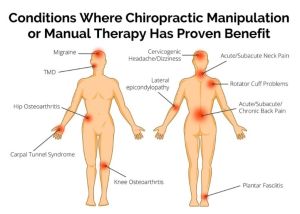
Are chiropractic adjustments safe?
Chiropractic adjustments are safe when delivered by a qualified Doctor of Chiropractic. Dr Tamaryn Schäfer is qualified and registered with the regulating bodies including, The Chiropractic Association of South Africa and Allied Health Professions of South Africa.
The evidence suggests that spinal adjustments are generally associated with temporary, mild-to-moderate side effects, describe as muscle soreness after exercising and working out in the gym.
Other common side effects include fatigue, temporary soreness, stiffness, increased pain or headache. These symptoms often settle within about 24 to 48 hours. Every individual will experience a chiropractic adjustment differently because we are all different and our nervous systems are functioning at different levels. Some may have side effects and others may not, however the effects are temporary and after a few adjustments your body starts to heal and adapt to the adjustments just like when you exercise. Here is the most recent research:
Are there serious risks associated with neck adjustments?
In extremely rare cases (estimated far less than 1 in 5,7 million for cervical manipulation), serious complications like stroke or vascular issues. We screen carefully for contraindications, but chiropractic care may not be suitable for everyone or every condition. A recent study concluded: “it is unlikely that chiropractic care is a significant cause of injury. In fact, risk of injury was 76% lower among subjects with a chiropractic office visit than those who saw a primary care physician.”
To conclude the myth on the safety of a chiropractic neck adjustment in a recent Annals of Medicine paper highlighted the problem behind the “chiropractic is dangerous” myth:
“The assumption that the cervical manual-therapy intervention triggers CAD [cervical artery dissection stroke] in rare cases has been dominated by single-case reports and retrospective case series or surveys from neurologists who naturally lack substantial methodological quality to establish definitive causality. These neurological case reports have probably contributed to an over-reporting of serious and catastrophic adverse events.”
Do chiropractic adjustments do?
A chiropractic adjustment is delivered specifically to a spinal segment that is dysfunctional caused by stress also known as a restriction/subluxation. The stress is due to lack of motion of the spinal joint which can be associated with physical, chemical and emotional factors. When the chiropractor starts to restore motion in the dysfunctional segment a proprioceptive signal goes to the brain improving the communication to that area of the body thus removing nerve interference improving the functioning and healing capacity of that area. If you have ever cut yourself and you stick your finger in the hole, does it heal? Only once you remove the finger (interference) then does the healing take place.
When should you seek urgent medical care?
Seek emergency medical attention for a new and sudden, extremely severe headache, new weakness or numbness, difficulty speaking, loss of coordination, new difficulty walking, loss of consciousness or other symptoms suggestive of a stroke or serious neurological condition.
New bladder or bowel incontinence, numbness around the groin or saddle area, or rapidly progressing weakness also require urgent assessment.
Chiropractic care at Schäfer Chiropractic and Associates
We work with your nervous system as it is housed by your spine and controls every movement and process in your body. Spinal restrictions can interfere with these signals, potentially causing pain, tingling, numbness, or reduced function. Unlike painkillers, which mask symptoms, chiropractic care aims to address the underlying cause leading to less interference and better functioning.
Contact Schäfer Chiropractic and Associates in Somerset West to discuss your concerns and find out whether an individual chiropractic assessment is appropriate for you.
